Sub-Zero & Wolf repair in Highland Park.
Independent Sub-Zero and Wolf repair requests in Highland Park, IL. Get appliance guidance and confirm ZIP-code coverage at (224) 347-1756.
Call (224) 347-1756 ↗
Give each wine-storage zone its own record
For a Highland Park wine-storage visit, record each affected zone’s setting and displayed reading. Note door alerts, bottle loads and when the pattern began. Share the model number and whether the unit is built-in or undercounter.
Keep ventilation access clear and the appliance in place. Discuss suitable alternative storage for valuable bottles if the intended conditions cannot be maintained while a diagnosis and parts plan are arranged.
Choose the appliance that needs attention
Sub-Zero refrigeration
Cooling, ice, leaks and door-seal concerns for built-in refrigerators and freezers.
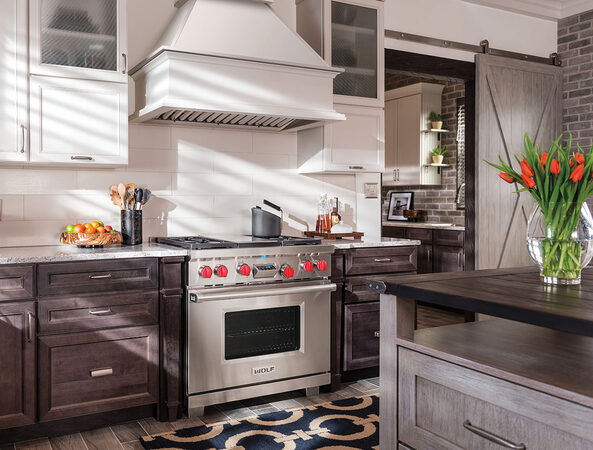
Wolf cooking appliances
Ovens, ranges and cooktops with heating, ignition or control issues.
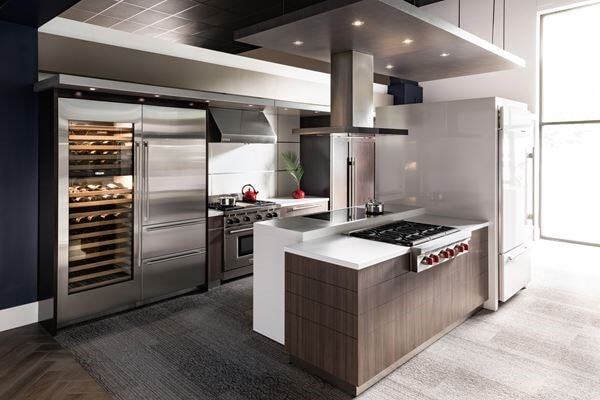
Wine storage
Temperature, door, fan and display concerns in Sub-Zero wine storage.
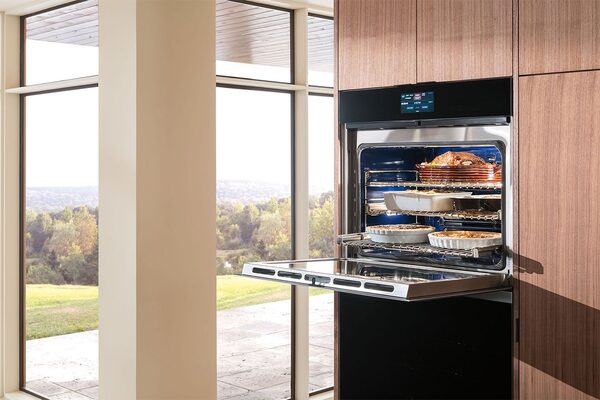
Care & maintenance
Condenser care, accessible seals and a practical maintenance plan.
Before you arrange a visit
- Have the model and serial number ready, along with the main symptom.
- Confirm coverage for your exact ZIP code and current appointment availability.
- Ask about the diagnostic charge, repair approval and parts availability.
- If manufacturer warranty may apply, check the official service channel first.
A useful guide for your request
Nearby service-area information
A wine-storage zone with a changing display
Imagine a Highland Park wine unit where one zone’s reading has changed while the other seems unchanged. The owner records each setting and observation separately and notes recent bottle loading or door use. The unit remains installed, and an appropriate temporary storage plan is considered if the collection cannot remain under its intended conditions. This is a hypothetical service-planning example. It shows why zone information is more useful than a general statement that the cooler is warm. The assessment should relate the proposed work to the model and observed behavior, with parts availability and access discussed before approval.
Compare repair options with the installation in mind
Ask for a proposal that identifies the diagnosed concern, the recommended work and the expected next step. A temperature display alone is not enough to select a sensor, control or compressor. The exact model, operating findings and installation should guide the recommendation. Request a plain-language explanation if the proposal is unclear.
Discuss the diagnostic charge, part availability, labor and any potential return visit. Clarify what is included and how additional findings will be approved. If the appliance is installed among custom cabinetry, ask whether access affects the work or whether another trade might need to be involved. Do not assume that a standard-looking front makes every installation identical.
When considering replacement, account for the fit, ventilation requirements, door arrangement and surrounding finishes as well as the new appliance itself. A repair-versus-replacement decision should use the actual facts of the unit and kitchen, not a universal age cutoff or a promised remaining lifespan.
After work is completed, ask what normal-use observations should be made and when to report a continuing concern. Keep the model information, invoice and applicable terms together. If manufacturer warranty might apply, confirm the manufacturer’s service route before authorizing independent paid service. A clear record supports future decisions without implying that any repair guarantees permanent temperature stability.
Identify the oven before interpreting its behavior
Begin with the model number and appliance type. A Wolf wall oven, gas range, dual-fuel range and induction range can use different systems. The appearance of the cooktop does not always describe how the oven beneath it heats. If you are unsure, provide the model information rather than guessing at the internal design.
For a double oven, identify the affected cavity. Explain whether the concern is limited to one cavity, one cooking mode or the appliance as a whole. A report that the upper oven does not begin preheating while the lower oven appears to operate gives more useful information than a general statement that the oven is broken.
Record the selected mode, temperature and visible display message. Describe what happens after the control is set: no apparent response, a preheat indication that does not progress or a cycle that starts and stops. Avoid repeated high-temperature trials just to refine the description. Ordinary observations and the model number are enough to begin planning a diagnosis.
Tell the service provider about a recent self-clean cycle, power interruption or change in controls. These events are context, not proof of a particular failure. Keep the sequence clear so the technician can decide what to investigate. Do not bypass a safety device or remove a panel to discover whether a component is receiving power.
Coordinate the people, property and appliance access
Confirm who will be present and able to discuss the appliance and approve work. If you are arranging service for a relative, tenant or another household member, make sure the contact details and approval process are clear. Do not assume that the person opening the door has the same information or authority as the person who made the initial call.
For a managed building, ask about contractor sign-in, service-elevator booking, parking and any documents required by management. Discuss those requirements before selecting a time. A building’s rules should be verified directly with its management; this website cannot know the access policy for a particular property.
For a home, describe stairs, gates, a long or restricted driveway and tight kitchen access where relevant. Share the exact location privately when arranging the appointment rather than posting access codes or personal details in a public place. Clear ordinary directions are usually more useful than an assumption that the technician will discover every restriction on arrival.
Clear loose items from the path and nearby work area. Keep pets and children away during service and allow cooking appliances to cool. Leave built-in equipment installed. If another trade recently altered cabinetry, plumbing or electrical work around the appliance, explain that history so the service provider can plan the appropriate assessment.
Use maintenance visits to ask better ownership questions
A planned care visit can be a useful time to discuss how the appliance is installed and used. Ask whether ventilation access is being obstructed by stored items, whether accessible seals show visible damage and whether the maintenance record is adequate. Keep the discussion tied to observations and the model’s instructions rather than requesting a promise that the appliance will never fail.
List any recurring concern separately. For example, occasional door alarms, an unusual sound or a change in ice production should each be described with timing and circumstances. Ask whether those concerns require a diagnostic assessment beyond the maintenance tasks you booked. This avoids confusion about what the visit is intended to accomplish.
Clarify exactly which tasks are included and which are optional. If additional work is recommended, ask what finding supports it and whether it addresses a current problem or future care. Approve a clear scope instead of an undefined package. Confirm charges and any applicable terms before work begins.
Keep a practical record afterward. The date, model, completed tasks and any recommended follow-up are usually more useful than a folder of generic maintenance advertisements. If the appliance later develops a problem, this record provides context without implying that routine care proves or rules out a particular failure.
Turn these observations into a useful local request
For a visit in Highland Park, begin with the exact municipality and ZIP code, then name the appliance and the function that changed. The topics above are selected to help you organize that conversation. They are not claims about which appliances are most common in the community or which failures occur there more often. A service-area page also does not represent a separate branch office.
Keep private property-access details for the scheduling conversation. Confirm current coverage, appointment availability, diagnostic charges and the process for approving work. If your appliance may be covered by a manufacturer warranty, use the manufacturer’s service channel before arranging independent paid work. For an immediate gas or electrical hazard, obtain the appropriate urgent assistance rather than waiting for a routine appointment.
Do you have an office in Highland Park?
These pages describe service-request areas. They do not represent separate branch offices. Call with your ZIP code to confirm coverage and availability.
Is this Factory Certified Service?
No. We are an independent repair service, not affiliated with or endorsed by Sub-Zero or Wolf. For manufacturer warranty work, use the manufacturer’s service locator.
